Top 6 causes of sudden MRI breakdowns and how regular maintenance prevents them
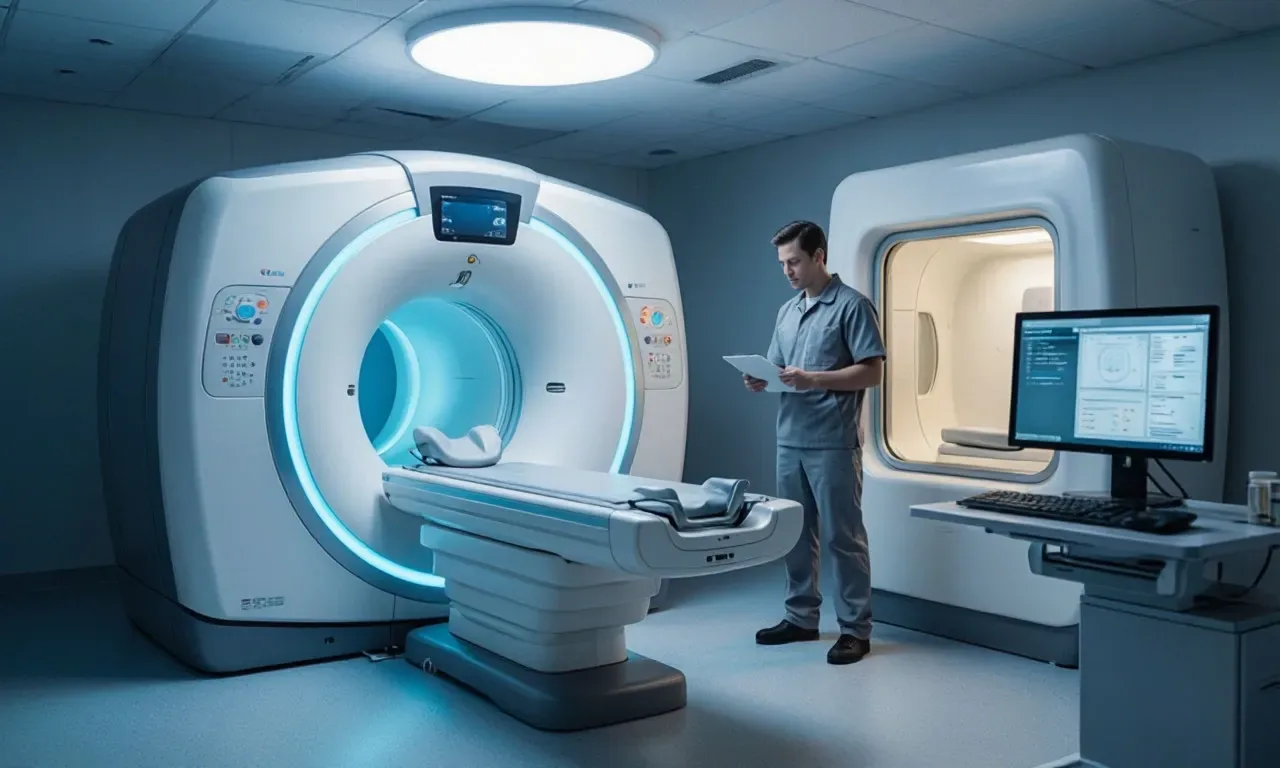
Yet most failures don't come “out of nowhere”: the scanner gives warning signs long before a breakdown. Let's go through six common causes and I'll show how scheduled MRI maintenance lets you meet them prepared.
Six common causes of sudden MRI failures
1. Helium leaks and boil-off. The helium level in the cryostat drops gradually, and without monitoring it reaches a critical point — the magnet then loses superconductivity and the scanner is out of service for weeks. Regular MRI helium refills with checks of the level and the cryosystem's condition almost eliminate this risk.
2. Loss of cooling capacity in the cryocompressor and cold head. As these components wear, helium boil-off rises — causes No. 1 and No. 2 usually go together.
3. Power supply and UPS faults. Voltage spikes, dips and overheating power cabinets knock out gradient amplifier units and controllers.
4. Climate problems in the equipment room. Clogged chiller and condenser filters and above-normal temperatures make the scanner “choke” and shut down from overheating.
5. Wear of the patient table's moving parts and drives. Gearboxes, cables and limit switches fail gradually — and without lubrication and adjustment they are what most often “brings down” the machine in the middle of a working day.
6. RF chain and gradient coil problems. Loose connectors, micro-cracks in solder joints and ageing coils show up as image artefacts long before a complete failure.
In each of these scenarios MRI repair brings the system back — but planned repair costs several times less than an emergency call-out with downtime and urgent logistics.
How regular MRI maintenance prevents failures
Prevention works not because “the procedure says so” but because almost every failure has warning signs that show up during an inspection. A typical maintenance schedule includes:
- daily — checking levels and parameters in the self-diagnostic logs, monitoring temperature and humidity in the equipment room;
- weekly/monthly — cleaning chiller and ventilation filters, visual inspection of connectors, field stability testing;
- quarterly — checking helium pressure and level, measuring cryocompressor consumption, lubricating and adjusting the table's moving parts;
- annually — full diagnostics of the RF and gradient chains, calibration, and inspection of worn components with replacement by MRI parts.
This regime doesn't just extend the machine's life: it turns “sudden” breakdowns into planned part replacements that fit easily into the schedule without stopping patient bookings.
Warning signs of an imminent breakdown: what to watch for
A scanner almost always gives a warning. Watch out for:
- more frequent errors in the self-diagnostic log and repeated auto-saves;
- rising helium boil-off while the cryocompressor is still running;
- unusual noises, vibration, individual components heating up;
- artefacts appearing and unstable image quality;
- longer scan times or repeated failures of the same sequence.
If you notice one of these signs, don't wait for the machine to stop on its own: a timely diagnostic visit from an engineer costs less than an emergency one.
In short: three takeaways for a medical centre manager
- Check the helium level and cryosystem parameters at least once a month — this is the most expensive and most predictable cause of breakdowns.
- Keep an error log and train staff to record “minor” faults: they almost always come before major ones.
- Plan maintenance and the replacement of worn components in advance — planned work costs several times less than emergency repair with its downtime.