Evacuation and cooldown of warm MRIs
The rarest and most expensive job: the MRI has warmed up after a quench or arrived warm from the manufacturer.
If a quench happens and the cold head isn't working efficiently, liquid helium keeps boiling off. Within a few days the MRI “warms up”.
The cryostat's helium vessel rises above the temperature of liquid nitrogen — 77 K (−196 °C). New MRIs also often arrive from the manufacturer warm and without helium.
Two scenarios
The cold head isn't working efficiently, the helium has boiled off and the MRI has warmed up.
New MRIs often arrive warm and without helium.
From vacuum to helium
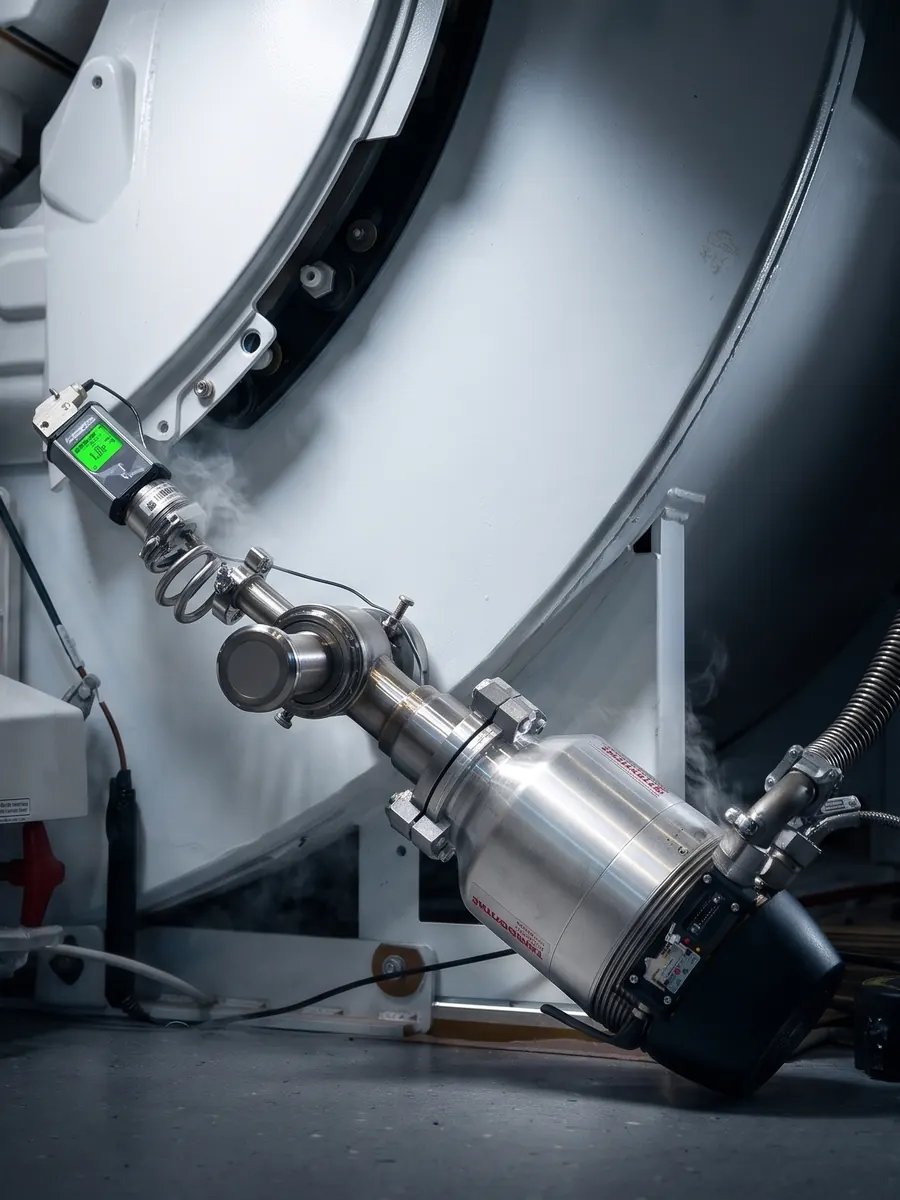
- 01Cryostat evacuation
We pump air and residual gases out of the vacuum space step by step with a turbomolecular pump, checking pressure and tightness.
- 02Drying the cryostat's helium vessel
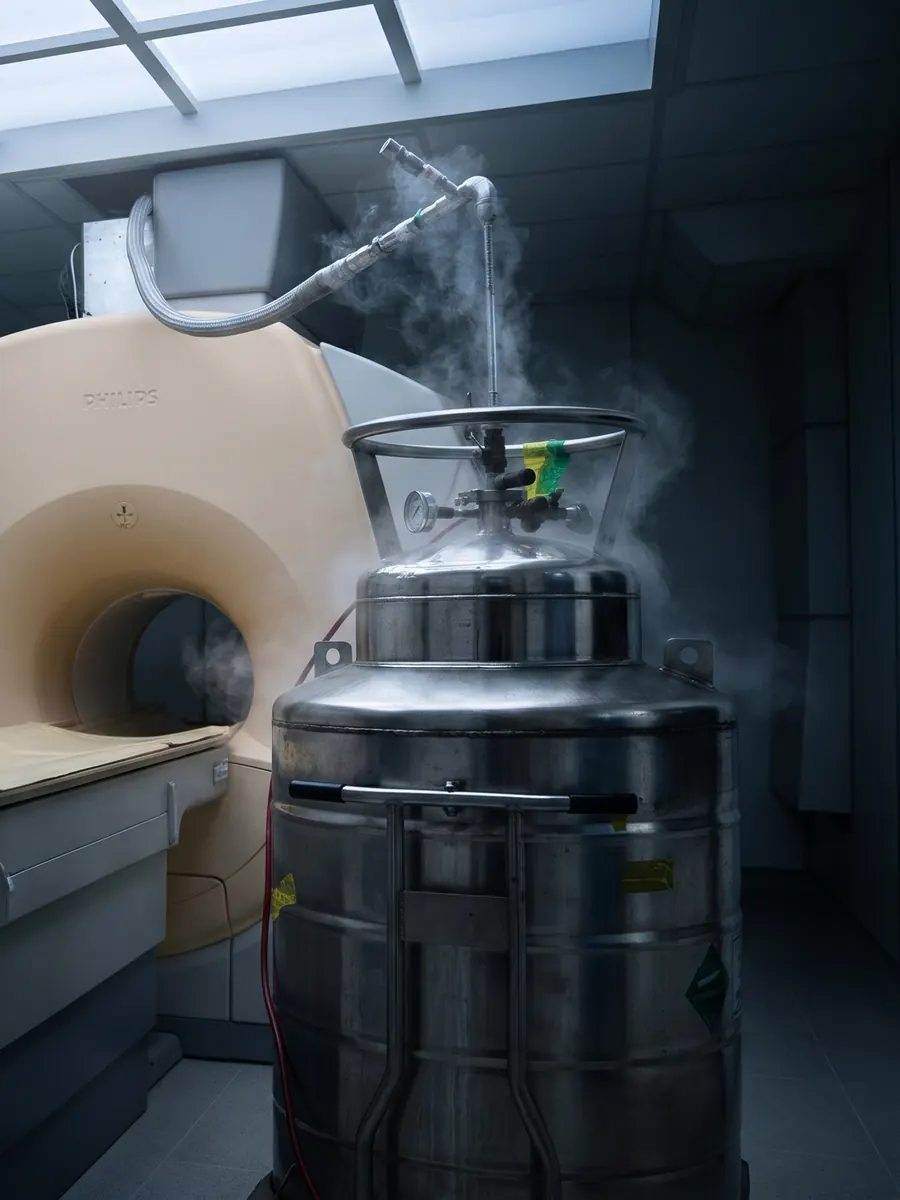
- 03Cooldown with liquid nitrogen
We gradually lower the temperature to an intermediate level and distribute the coolant evenly — without local thermal stress.
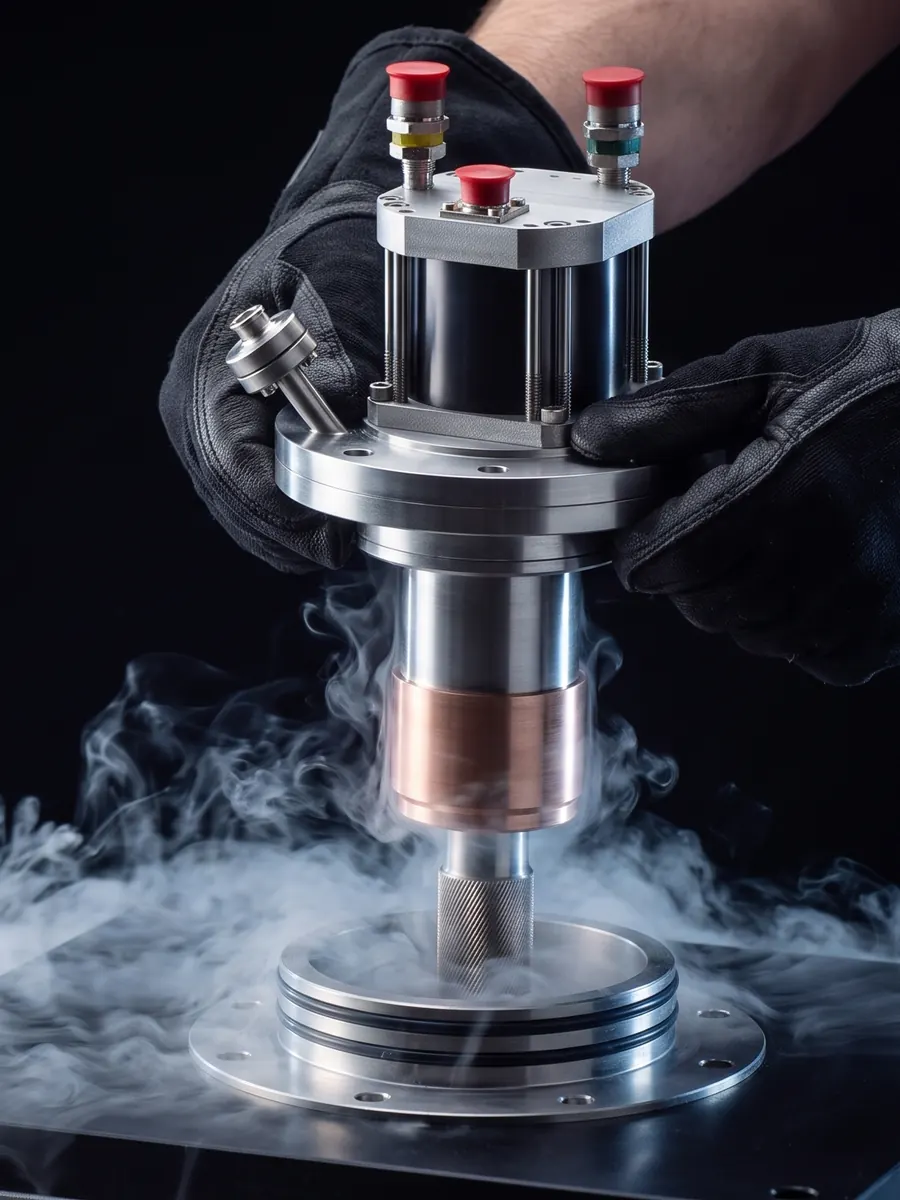
- 04Replacing the nitrogen atmosphere in the cryostat with helium
- 05Cooldown with liquid helium
We gradually bring the temperature down to operating values — usually around 4.2 K — while monitoring pressure in the helium circuit.
- 06Parameter checks
Helium vessel tightness, liquid helium level, sensors and monitoring systems. A work report with the key parameters.
Why this is a job for professionals
A mistake at any stage can have serious consequences.
Faster helium loss due to insufficient vacuum.
Thermal deformation of cryostat parts from cooling too quickly.
Lower cooling efficiency, premature equipment failure and costly repairs.
What we work with
Most often Siemens, Philips, GE and Canon. Less often Fuji, Hitachi, XGY, WDM.
Questions and answers
What does a “warm” MRI mean?
The cryostat's helium vessel is above the temperature of liquid nitrogen — 77 K (−196 °C). This happens after a quench if the cold head isn't working efficiently, or with new MRIs that arrive from the manufacturer without helium.
What should I do after a quench?
Don't switch the magnet on or try to refill it yourself. Contact us: we'll find the cause, cool down and refill the magnet and ramp it back to field.
Does the room need any preparation?
No, no special preparation is needed.
How can I pay?
We work by bank transfer only. This keeps payments transparent and simplifies paperwork.
Which regions do you cover?
We provide services across the Russian Federation and CIS countries — in any town or city.