MRI helium refill: how to estimate consumption, plan the date and choose a contractor
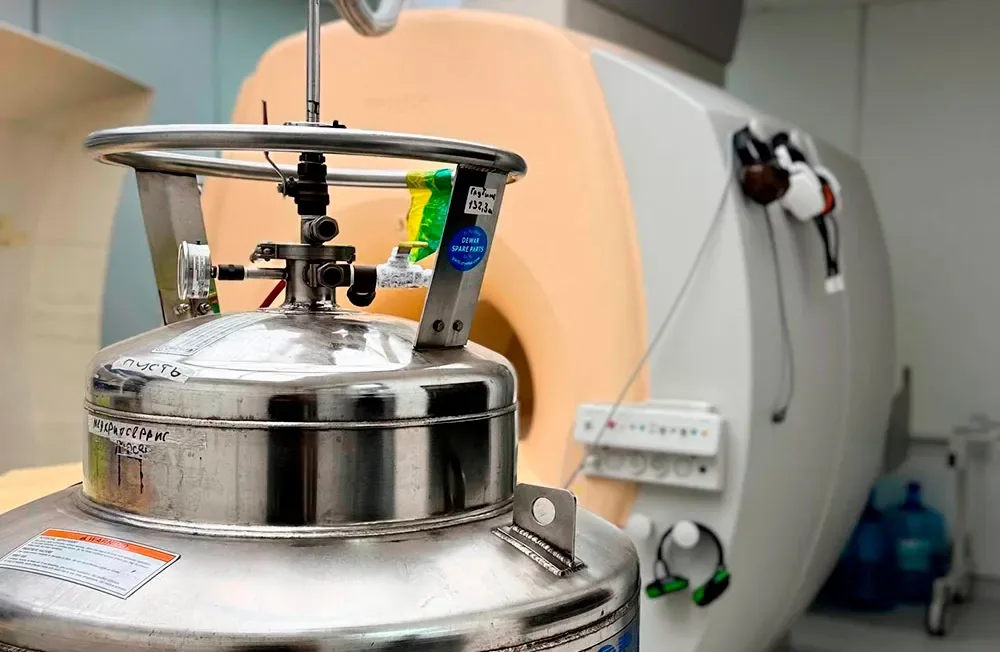
An MRI runs on liquid helium: it cools the superconducting magnet to a temperature at which current flows without losses.
As soon as the helium level falls below the critical mark, the magnet can lose superconductivity — and that's no longer a simple “top-up” but an emergency with a week of downtime and ramp-down. That's why MRI helium refills — are not a one-off purchase but a planned process that needs to be kept under control all year round.
How to monitor the helium level and calculate consumption
Modern scanners show the cryostat fill percentage right in the interface. For most systems the norm is above 60%; when it falls towards 40% it's time to plan a refill, and below 30% it's a matter of days. Take readings at least once a week and record them in a log — that way you see the real trend rather than one-off “dips” caused by the cold compressor kicking in.
The normal boil-off rate depends on the machine's generation: zero boil-off systems lose almost nothing, while older machines lose from tens of litres a month to 0.3–0.5 litres an hour. The calculation is simple: multiply the daily loss by the number of days since the last refill and add a 5–10% safety margin. If consumption suddenly rises, that's the first sign of a cryogenic system fault — call an engineer first and order gas afterwards.
A short routine makes scheduling easier:
- measure the level weekly and record it in the log;
- check consumption monthly using the formula and compare it with the rated values;
- order a refill when the level reaches 55–60%, 2–3 weeks ahead;
- unscheduled diagnostics after any jump in boil-off.
When and how to plan a refill
Relying on an “average interval between top-ups” is risky: for some machines it stretches to years, for others to months. The right guide is the actual consumption of your particular system over the last 6–12 months. It's better not to schedule a refill for a “hot” period when helium suppliers are overloaded, but to reserve the date and volume in advance: liquid helium is a scarce resource, and delivery can take several weeks.
When planning the date, allow time for preparation: agreeing pressure and volume requirements with the contractor, clearing access for the cryogenic transport vehicle and appointing a responsible engineer. The procedure itself takes a few hours, but it's best to clear the whole day's scan schedule — the machine is stopped during the refill.
How to choose a contractor for MRI helium refills
The criteria are simple and easy to check:
- experience with your specific scanner model and manufacturer approval for the procedure;
- in-house cryogenic logistics: helium should travel in specialised Dewars, not “whatever is available”;
- gas documentation: a quality certificate and origin, because impurities in helium damage the cryogenic system;
- a full turnkey refill with testing after the procedure and a report for your maintenance log.
Ask the contractor for cases with your class of equipment and compare not only the price of the gas but also the cost of the call-out, downtime and service support. An experienced contractor will also spot signs of looming problems — which saves far more than cutting the call-out cost.
In brief
- Check the helium level weekly and plan a refill at 55–60% without waiting for an alarm.
- Calculate consumption from your machine's actual data, not from average figures.
- Choose a contractor with manufacturer approval, in-house logistics and quality certificates for the gas — a low price without these ends up costing more.