In-house or outsourced MRI service: which to choose and where the risks hide
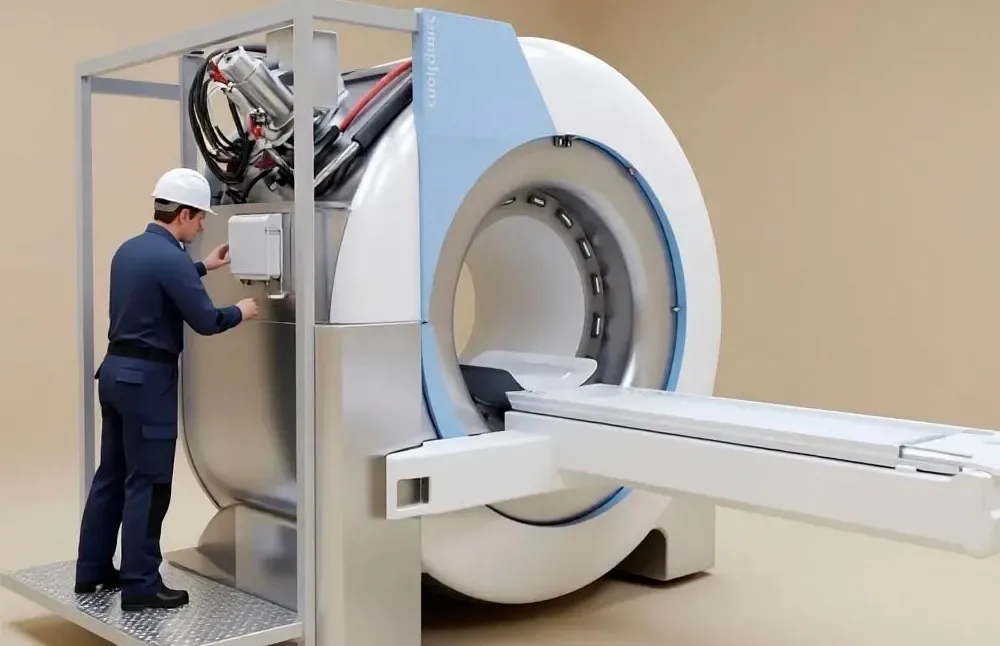
When a scanner goes down mid-shift, the decision has to be made in hours, not months. And the choice isn't “repair or not” but who exactly provides the MRI service: an in-house engineer or a contractor with a team and a warehouse. We compare both approaches and look at where money is most often lost.
What an in-house engineer gives you
An in-house specialist means speed on the small things: rebooting a controller, replacing a fan, clearing an error from the log, adjusting table positioning. They know the history of that particular machine, keep the operating log and notice components degrading before they fail.
The downside is coverage. One person physically can't handle cryogenics, gradients, the RF chain, the power section and reconstruction software all at once. It takes certifications, manufacturer training, access to service software and catalogues, and holiday on-call duty. Plus there's a single point of failure: the engineer is on holiday and the scanner is down.
When outsourcing makes more sense
A contract with a service company covers what's too costly to keep in-house: a cryogenics team, in-depth diagnostics and fault inspection. This also covers MRI helium refills on schedule, before the level drops to the automatic ramp-down threshold — a single missed refill costs more than a whole year of service. Independent MRI repair usually costs several times less than official support at comparable quality, and MRI parts can actually be taken from the contractor's warehouse instead of waiting for delivery from abroad. Market experience shows that outsourced MRI service pays off when you have two or more machines or when the manufacturer has ended support for the model.
How to choose a contractor
- Experience with your specific model and generation, not “we work with all vendors”.
- An in-house cryogenics team and equipment for working with Dewar vessels.
- A warehouse or a proven supply channel for components, with a lead time for every item in the quote.
- A fault inspection with a report and photos before work starts, and a transparent quote without “floating” lines.
- An SLA in the contract: response hours, arrival time, repair deadline and liability for delays.
- A warranty on work and replaced components, an equipment log and liability insurance.
Common mistakes when outsourcing
The contract is signed, everyone relaxes — and service slides into reacting after breakdowns. Then it all follows the script: scheduled maintenance is skipped, helium refills are put off “for later” to save money, components are replaced without compatibility checks, and the contractor hears about failure symptoms from an administrator because the in-house engineer was let go in favour of outsourcing. In the end the clinic pays for urgency where it could have paid on schedule.
What to keep in-house
Keep an on-duty engineer on staff — they describe the symptoms, sign off the work and keep the log. Hand cryogenics, electronics and fault inspection to a contractor with experience, a warehouse and a written SLA. And most importantly: scheduled maintenance is almost always cheaper than emergency repair, and saving on the maintenance schedule turns into a quench and weeks of downtime.