Scheduled MRI maintenance: how to plan a service schedule and avoid overpaying for emergency repairs
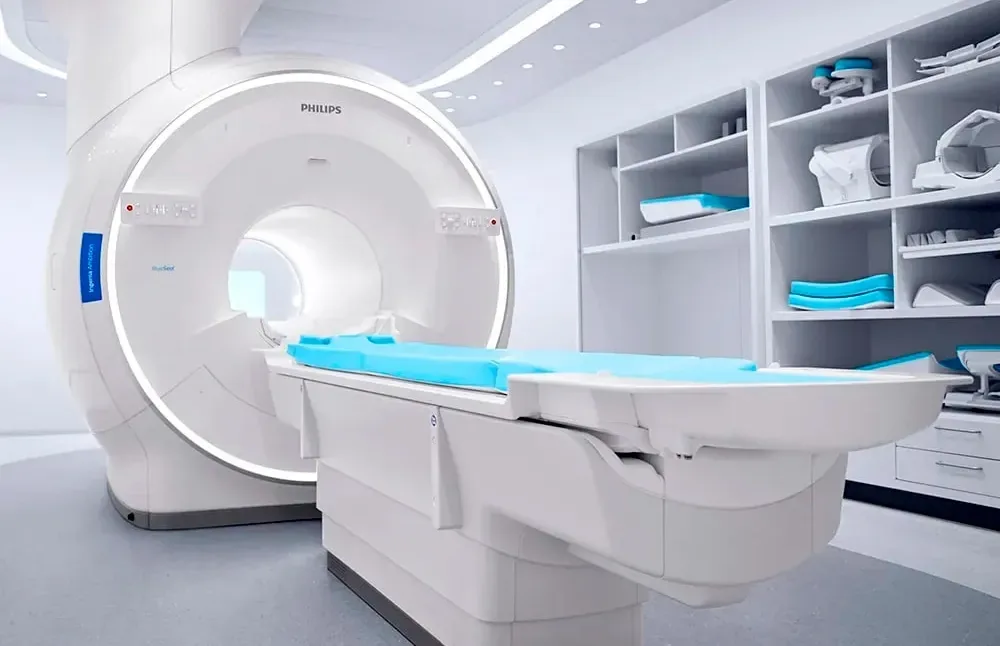
An MRI is a temperamental machine. One component fails, and suddenly a week of appointments is cancelled, engineers are flying in with parts at urgent rates, and management is counting the losses.
Scheduled MRI maintenance keeps this under control. Below is what the procedure includes, how to build a schedule and why prevention always costs less than dealing with breakdowns.
Why scheduled maintenance matters and what a clinic risks without it
An MRI rarely breaks down out of the blue. First helium consumption rises, vibration slowly wears the seals and dust clogs the cooling filters. The machine is running, patients keep coming and everything seems fine. But every skipped maintenance cycle brings closer the moment when a small problem becomes the failure of a whole component.
What this leads to:
- Emergency downtime. A gradient amplifier or cold head failure keeps the machine down for days, sometimes weeks.
- Urgent MRI repair. An unscheduled call-out, express parts delivery and night shifts all cost several times more than scheduled work.
- Excess helium consumption. Worn seals and a loss of vacuum in the cryostat speed up boil-off. Timely MRI helium refills combined with a cryosystem check help keep consumption normal.
- Losing patients. Every day of downtime means cancelled appointments, negative reviews and patients going to neighbouring clinics.
What scheduled MRI maintenance includes
A standard maintenance cycle covers all the machine's critical systems. The list depends on the model and operating hours, but the basic procedure looks like this:
- Cryogenic system. Measuring the helium level, monitoring the boil-off rate, checking the cold head for vibration and noise, checking the vacuum.
- Electronics and control. Reading error logs, checking cables, testing power supplies and controllers.
- Gradient amplifiers. Monitoring heating, checking cooling fans, diagnosing current circuits.
- Cooling system. Cleaning filters, checking water circuits, monitoring coolant temperature.
- Seals and mechanics. Inspecting the cryostat, O-rings and gas lines for leaks.
- Cold heads and repair kits. Checking performance and replacing worn parts before the loss of cooling capacity becomes critical.
If an inspection reveals a worn part, it's ordered in advance from the catalogue of MRI parts — not in “we needed it yesterday” mode. That's the whole point of the planned approach.
How to build a maintenance schedule
A schedule rests on two reference points: calendar intervals and operating hours. If the machine runs more than 12 hours a day, the calendar isn't enough — components wear faster and maintenance needs to be more frequent.
A practical scheme:
- Monthly — helium level check, log review, visual inspection of the cryogenic and cooling systems.
- Quarterly — gradient amplifier check, filter cleaning, electronics testing.
- Every six months — extended cold head diagnostics, vacuum check, seal inspection.
- Annually — full maintenance with consumables replacement, calibration and verification of all systems.
Plan maintenance for quieter periods — weekends, holidays, seasonal dips. The machine will then be in service exactly when patient flow peaks.
Why prevention is cheaper than emergency repair
Two scenarios. Scheduled maintenance: the engineer arrives on schedule, diagnostics and consumables replacement take a few hours, parts are ordered in advance. The cost is predictable. An emergency failure: a call-out at a higher rate, urgent parts purchases with a premium for speed, downtime from two days to several weeks. Add the lost revenue from cancelled patients. In the end a breakdown can cost 4–5 times more than a year of maintenance.
Summary: three tips
- Don't put maintenance off “until next month”. Most breakdowns start with signs that scheduled diagnostics catch early.
- Keep a parameter log. Helium level, amplifier temperature, error logs — the trends will reveal wear long before a breakdown.
- Keep critical parts in stock. Cold head repair kits and cooling consumables ordered in advance cut downtime from weeks to hours.